Wednesday, August 22, 2007

Complex Systems in Corporate Warfare

"Physicists like to think that all you have to do is say, these are the conditions, now what happens next?"
—Richard P. Feynman

The flow of events in corporate warfare is uniquely shaped by the specifics of every situation…the course of warfare is never entirely predictable.

The entrance of complex systems analysis into Corporate Warfare:

  • Inherent complexity theory and nonlinear systems theory
  • "Butterfly Effect": "a butterfly stirring the air today in Peking can transform storm systems next month in New York."

Complexity Theory: Used in analyzing systems in which there are numerous unknown variables, such that it is used in calculating or developing algorithm (e.g. processes) to define what those variables are, or to otherwise assign “nice” boundaries, contexts, or operating parameters to.

Nonlinear Systems Theory: The theory that objects, situations, markets, industries, or other events or systems appear different when viewed from different angles or perspectives. It can also be defined as the simple departure from linear—that is, step-by-step procedures—involved in events and making decisions surrounding their further development and outcome.

Most market phenomena are generally nonlinear in nature.

Clauswitz on a Decisive-Force Victory:

“Events [of Corporate Warfare] are proof that success is not due simply to general causes. Particular factors can often be decisive—details known only to those who were on the spot. There can also be moral factors which never come to light; while issues can be decided by chances and incidents so minute as to figure in histories simply as anecdotes.”

Interpretation & Analysis:

  • Victory is often decided on the tactical scale, and not on the strategic
    • Requires proper training of supervisory and middle-level managers
  • Psychological/Morals-based
    • The “subjective art” to corporate warfare; basing maneuvers on principle
  • Victory is detail-oriented
  • The most true contest in corporate warfare is one that occurs between near-equals
  • In struggles between opponents markedly unequal in terms of resources available, general factors tend to be (but are not necessarily) more decisive
  • The greatest familiarity with the most correct theory does not permit the decision-maker to skip the details.

The Levels of the Corporate Warfare Force Continuum

Three general classifications herein:

1. Primordial

  • The people involved begin to exhibit “blind natural force,” or intentionally subjecting you or your business unit to hatred or hostility

2. Probability

  • The manager or collective business unit involved utilize chance, probability, and creative spirit

3. Subordination

  • As an instrument of corporate policy, originating from senior management,


Although, let it be stated that raw strength is not to be despised in exclusive favor of clever stratagems:

"The maximum use of force is in no way incompatible with the simultaneous use of the intellect. If one side uses force without reluctance, undeterred by the upset to both sides which it involves, while the other side refrains, the first will gain the upper hand."

Therefore, one should not hesitate. Do not forget that there is no substitute for sound planning.

One may take from this, also, that it is alright not to go into a corporate battle with the utmost resources, human and otherwise, available to them. It is not necessary that the victor would necessarily be the side with the most employees with which to fight and win the battles; but that there is no excuse for going into a corporate campaign with less than the maximum available power.

Tuesday, August 21, 2007

News from Matthew’s Browser

What makes 13-24 year olds happy? Spending time with family, friends, and significant others: In that order.

What this guy does to live frugally. Most of his suggestions are common sense, but it might just help you with saving a few more dollars at the end of the month.

Want to be more like the super-secret (squirrel) agent ala James Bond, the dude from Burn Notice, or Jason Bourne? This guy wrote a blog page that covers things from turning a $10 flashlight into a $100 “police torch,” to making a remote control detonator. Of course, many of these things are for educational purposes only, but something to keep in mind when you’re in that sort of particular bind.

Ever tried envisioning scales that are larger than that from your place to the local gas station? The larger they get, the more difficult it becomes to envision. This page offers analogies for some astronomical distances that might help you feel more accurately your place in the grander scale of things while upon this “blue marble.”

Milestone in the regeneration of brain cells: “The majority of cells in the human brain are not nerve cells but star-shaped glia cells, the so called “astroglia”. “Glia means “glue”, explains Götz. “As befits their name, until now these cells have been regarded merely as a kind of “putty” keeping the nerve cells together…Our results are very encouraging, because the generation of correctly functional nerve cells from postnatal glia cells is an important step on the way to be able to replace functional nerve cells also after injuries in the brain,” underlines Magdalena Götz..”

Twenty Investment Options: “Capital appreciation may be more important for the young investor, but once she enters her golden years, that same investor may place a greater emphasis on gaining income. Whatever your objective, knowing what investment options are out there is key.”

To become a success, it is often helpful to read about other people succeeding: How they did so, their motivators…the entire dynamics of the journey. In this article, CNet Staff Writer Stefanie Olsen interviews a teen Internet entrepreneur about MyYearbook.com.

A very cool new product from Microsoft has recently been released into the wild: Microsoft Home Server. Think the strengths of a corporate network made simple enough for the novice home user.

How do you differentiate yourself from your competitors in the market of online/mail movie rentals? Netflix has had price wars with Blockbuster and now they are going one step further: Expanding their customer service. The kicker—their customer service staff as some pretty good leniency in offering incentives to keep customers happy.

Fun and useful: How to deal with the scummy car deal salesman-type.

Have one of those old popcorn air poppers? Like coffee? Roast your own beans!

One of my passions is physics. As such, one of the questions that I’ve asked myself is about the elusiveness of the universe. This article explains some of that.

Of course, the top colleges in the United States for 2008.

My last road trip route, if you were interested. Photos soon at MatthewHetland.com!

Essentials of Corporate Warfare

"In tactics, as in strategy, superiority of numbers is the most common element in victory."
--Carl von Clauswitz, On War

“Kind-hearted people might of course think there was some ingenious way to…defeat [a competitor] without too much [harm done], and might imagine this is the true goal of the art of [corporate warfare]. Pleasant as it [may sound], it is a fallacy that must be exposed: [corporate warfare] is such a dangerous business that the mistakes which come from kindness are the very worst. The maximum use of force is in no way incompatible with the simultaneous use of the intellect.”

Interpretation:

  • Corporate warfare is not for the weak
  • Don’t try to lessen or dampen the effects of certain actions on the opponent
  • Kindness creates mistakes of the worst variety
  • Maximum force requires maximum intellect

Essentials of Offense and Defense

Offense increases strength, which is produced by conquest

Defense increases the level or ability of self-preservation

Defensive measures are often undertaken by the weaker opponent; entrenchments and fixed fortifications are among the strongest forms of a good defense, tactically; but they should not be relied upon heavily. The defender is able, though; to more easily draw on its sources of strength, especially under fortification.

Historically, the defender has been able to choose the grounds for battle

The essence of defending is waiting to see what the aggressor’s intentions will be. To master defense is being able to see when the aggressor has exhausted his or her resources, and then exploit that opportunity. An active defense, while being perceived as passivity by the aggressor, and as an aggression of well-directed blows by the defender is what is necessary to mastering the art of defense. Defense is only done with the intent of moving into the offense; shifting from defender to aggressor.

Public opinion is more likely to favor the strategic defender—significant conquests by one contender will threaten all remaining possible opponents and affect the public in a negative fashion if the information is not “spun” correctly. Even so, the general public may look upon the firm on the offense negatively, while they look upon the “little guy,” that is, the smaller or defensive firm, in a positive light. This is particularly true in U.S. and European cultures.

Offensively, there should be emphasis placed on the pursuit, which permits the infliction of disproportionate losses on the loser of corporate combat.

Keep in mind, however strongly an offensive may start out, inevitably it must weaken as it advances from its original base.

The aggressor’s force is degraded by the needs to provide garrisons, to maintain the lines of supply and communications, and the greater physical strain on troops in the attack.

Every offensive, however victorious, has a "culminating point,” a point in which it is able to reach it’s natural critical mass.

The Russian Winter Principle: Given that the defender has enough time and resources in which to recover, the aggressor will inevitably reach a point at which he or she must take up the defense. If the business unit pushes too far, the equilibrium will shift against that unit. The aggressor, in his or her own retreat (often through devastated territory), cannot draw on the defender's usual resources, from which he or she draws strength.

Conclusions on Offense and Defense

The first rule is therefore to enter the field with a force as strong as possible. This sounds very like a commonplace, but still it is really not so.

The second rule, then, is to enter the battlefield with a force that is led by the most intellectually sound corporate leader who has a strong grasp of the strategic; with subordinate managers that have strong grasps on the tactical.

Strength: The ability to be powerfully effective

The following conditions must exist for strength to be present, in priority order:

1) Capable of exerting a high amount of force

2) In good or sound health; robust

3) Capable of the effective exercise of authority

4) Economically or financially sound or thriving

5) Having force of character, will, morality, or intelligence

6) Having or showing ability or achievement in a specified field

7) Capable of withstanding great force or wear; or excellent binding or espirit de corps

8) Not easily upset

9) Having force or rapidity of motion

10) Intense in degree or quality

Clauswitz, The General

The following is a short memoir of the Prussian General Carl von Clauswitz taken from the forward of a non-copyrighted translation of his magnus opus On War. On War continues to be the basis for western military thought and strategy.

General Carl Von Clausewitz, was born at Burg, near Magdeburg, in 1780, and entered the Prussian Army as Fahnenjunker (i.e., ensign) in 1792. He served in the campaigns of 1793-94 on the Rhine, after which he seems to have devoted some time to the study of the scientific branches of his profession. In 1801 he entered the Military School at Berlin, and remained there till 1803. During his residence there he attracted the notice of General Scharnhorst, then at the head of the establishment; and the patronage of this distinguished officer had immense influence on his future career, and we may gather from his writings that he ever afterwards continued to entertain a high esteem for Scharnhorst. In the campaign of 1806 he served as Aide-de-camp to Prince Augustus of Prussia; and being wounded and taken prisoner, he was sent into France until the close of that war. On his return, he was placed on General Scharnhorst’s Staff, and employed in the work then going on for the reorganisation of the Army. He was also at this time selected as military instructor to the late King of Prussia, then Crown Prince. In 1812 Clausewitz, with several other Prussian officers, having entered the Russian service, his first appointment was as Aide-de-camp to General Phul. Afterwards, while serving with Wittgenstein’s army, he assisted in negotiating the famous convention of Tauroggen with York. Of the part he took in that affair he has left an interesting account in his work on the “Russian Campaign.” It is there stated that, in order to bring the correspondence which had been carried on with York to a termination in one way or another, the Author was despatched to York’s headquarters with two letters, one was from General d'Auvray, the Chief of the Staff of Wittgenstein’s army, to General Diebitsch, showing the arrangements made to cut off York’s corps from Macdonald (this was necessary in order to give York a plausible excuse for seceding from the French); the other was an intercepted letter from Macdonald to the Duke of Bassano. With regard to the former of these, the Author says, “it would not have had weight with a man like York, but for a military justification, if the Prussian Court should require one as against the French, it was important.”

The second letter was calculated at the least to call up in General York’s mind all the feelings of bitterness which perhaps for some days past bad been diminished by the consciousness of his own behaviour towards the writer.

As the Author entered General York’s chamber, the latter called out to him, “Keep off from me; I will have nothing more to do with you; your d----d Cossacks have let a letter of Macdonald’s pass through them, which brings me an order to march on Piktrepohnen, in order there to effect our junction. All doubt is now at an end; your troops do not come up; you are too weak; march I must, and I must excuse myself from further negotiation, which may cost me my head.” The Author said that be would make no opposition to all this, but begged for a candle, as he had letters to show the General, and, as the latter seemed still to hesitate, the Author added, “Your Excellency will not surely place me in the embarrassment of departing without having executed my commission.” The General ordered candles, and called in Colonel von Roeder, the chief of his staff, from the ante-chamber. The letters were read. After a pause of an instant, the General said, “Clausewitz, you are a Prussian, do you believe that the letter of General d'Auvray is sincere, and that Wittgenstein’s troops will really be at the points he mentioned on the 31st?” The Author replied, “I pledge myself for the sincerity of this letter upon the knowledge I have of General d'Auvray and the other men of Wittgenstein’s headquarters; whether the dispositions he announces can be accomplished as he lays down I certainly cannot pledge myself; for your Excellency knows that in war we must often fall short of the line we have drawn for ourselves.” The General was silent for a few minutes of earnest reflection; then he held out his hand to the Author, and said, “You have me. Tell General Diebitsch that we must confer early to-morrow at the mill of Poschenen, and that I am now firmly determined to separate myself from the French and their cause.” The hour was fixed for 8 A.M. After this was settled, the General added, “But I will not do the thing by halves, I will get you Massenbach also.” He called in an officer who was of Massenbach’s cavalry, and who had just left them. Much like Schiller’s Wallenstein, he asked, walking up and down the room the while, “What say your regiments?” The officer broke out with enthusiasm at the idea of a riddance from the French alliance, and said that every man of the troops in question felt the same.

“You young ones may talk; but my older head is shaking on my shoulders,” replied the General. ["Campaign in Russia in 1812”; translated from the German of General Von Clausewitz – by Lord Ellesmere].

After the close of the Russian campaign Clausewitz remained in the service of that country, but was attached as a Russian staff officer to Blucher’s headquarters till the Armistice in 1813.

In 1814, he became Chief of the Staff of General Walmoden’s Russo-German Corps, which formed part of the Army of the North under Bernadotte. His name is frequently mentioned with distinction in that campaign, particularly in connection with the affair of Goehrde.

Clausewitz re-entered the Prussian service in 1815, and served as Chief of the Staff to Thielman’s corps, which was engaged with Grouchy at Wavre, on the 18th of June.

After the Peace, he was employed in a command on the Rhine. In 1818, he became Major-General, and Director of the Military School at which he had been previously educated.

In 1830, he was appointed Inspector of Artillery at Breslau, but soon after nominated Chief of the Staff to the Army of Observation, under Marshal Gneisenau on the Polish frontier.

The latest notices of his life and services are probably to be found in the memoirs of General Brandt, who, from being on the staff of Gneisenau’s army, was brought into daily intercourse with Clausewitz in matters of duty, and also frequently met him at the table of Marshal Gneisenau, at Posen.

Amongst other anecdotes, General Brandt relates that, upon one occasion, the conversation at the Marshal’s table turned upon a sermon preached by a priest, in which some great absurdities were introduced, and a discussion arose as to whether the Bishop should not be made responsible for what the priest had said. This led to the topic of theology in general, when General Brandt, speaking of himself, says, “I expressed an opinion that theology is only to be regarded as an historical process, as a MOMENT in the gradual development of the human race. This brought upon me an attack from all quarters, but more especially from Clausewitz, who ought to have been on my side, he having been an adherent and pupil of Kiesewetter’s, who had indoctrinated him in the philosophy of Kant, certainly diluted--I might even say in homoeopathic doses.” This anecdote is only interesting as the mention of Kiesewetter points to a circumstance in the life of Clausewitz that may have had an influence in forming those habits of thought which distinguish his writings.

“The way,” says General Brandt, “in which General Clausewitz judged of things, drew conclusions from movements and marches, calculated the times of the marches, and the points where decisions would take place, was extremely interesting. Fate has unfortunately denied him an opportunity of showing his talents in high command, but I have a firm persuasion that as a strategist he would have greatly distinguished himself. As a leader on the field of battle, on the other hand, he would not have been so much in his right place, from a manque d'habitude du commandement, he wanted the art d'enlever les troupes.”

After the Prussian Army of Observation was dissolved, Clausewitz returned to Breslau, and a few days after his arrival was seized with cholera, the seeds of which he must have brought with him from the army on the Polish frontier. His death took place in November 1831.

His writings are contained in nine volumes, published after his death, but his fame rests most upon the three volumes forming his treatise on War. In the present attempt to render into English this portion of the works of Clausewitz, the translator is sensible of many deficiencies, but he hopes at all events to succeed in making this celebrated treatise better known in England, believing, as he does, that so far as the work concerns the interests of this country, it has lost none of the importance it possessed at the time of its first publication.

Monday, August 20, 2007

Monkey Mondays: Monkey Picks Locks. Monkey Escapes. Again


Yep.

Where there's a monkey with a will, there's a monkey who will find a way.

Thursday, August 16, 2007

Shaking Things Up

Instead of a normal post today, I decided to “shake things up” a little and just point you, the faithful readers of this blog, to a couple other things that have caught my interest in the past week:

Solving a Rubik’s Cube in 26 Steps

The Cure for Fear

Ten Politically Incorrect Truths about Human Nature

“There are lies…”

Lies

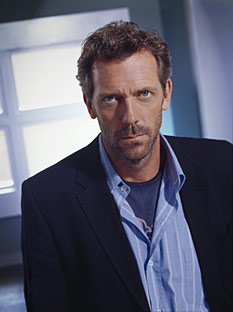
“Tell an untruth; pretend with intent to deceive.” A popular television series, which I like to watch when I can, House, MD, has a lead character—Dr. Gregory House—who believes that everyone lies. Why do people lie to one another? Wikipedia, home to the collaborative intellectual knowledge of the masses, states that lies are told because people have the “intention to deceive, maintain a secret or reputation, or to avoid punishment.” As a whole, people want to be perceived in a certain way: Strong, powerful, helpful, kind, etc. They also want to keep portions of their life that they intentionally keep hidden from the world in that persistent state. Lastly, people generally seek pleasure and avoid pain. While punishment runs the gamut from the type of discipline that a parent gives to a child, it could also mean the shame given to a person from a societal perspective for doing things that are against the norm or outside other acceptable boundaries.

With the exception of psychopathic personality types, however, most people aren’t serial liars. Any poker player will tell you that each person has their “tells.” Any individual that is familiar with the operation of a lie detector understands the mechanics of the human body when they tell something that they know to be a mistruth. People who deal with other people enough has the experience to tell you what to look for in what a person says and does in regards to truths and lies.

Damned Lies

The thing to look out for here is the individual who doesn’t know that they are lying. While lying is mostly a matter of intent, it could also be considered a tool of the manipulative in order to gain control over the situation. In this respect, serial liars can take advantage situations by not being able to tell the difference between what a factual reality is and what things are fabricated. They will not have the “tells” of a person who feels guilty for their actions because they do not have the capacity to feel guilt for their transgressions.

Statistics

Believe it or not, everyone has an agenda. Some might be simple enough: Get through my day and get home so I can relax. Others might be more insidious: Take over the world. Most fall in between. At any rate anyone may use statistics to get their point across, draw someone to action, and control their environment towards the outcome which they desire. Take, for instance, this insurance scenario:

“Suppose that a zealous insurance CEO asks his statistician if drivers with two or more tickets in a three-year period were more likely to have an accident.[1] He would soon report back that drivers with two or more tickets have almost twice [2] the chance of having an accident.

Wow! Twice the accident rate! What fools! The CEO might think that by hitting these guys with higher premiums, he might make them think about their careless driving habits. Maybe it will teach them a lesson. The company can make quite a bit more profit, as other insurers are not going to try and steal the worst drivers away. Furthermore, the state motor vehicle departments start thinking about taking away these driver's licenses. Everybody thinks that these guys have to be gotten off the road before they kill themselves or someone else. Unfortunately, they aren't careless drivers. According to the assumptions, they are equally good at driving as everybody else. The statistics lied. The difference in mileage exposure alone is enough to produce a strong correlation between tickets and accidents.”

While tickets isn’t, in and of itself, a contributable factor inasmuch as it indicates the entire risk that any one client is going to be for an insurance company if this were something that were correlated to the distance that a person drives in any given year, it may then gain more credibility. All things being equal, consider the case between the younger man and the older woman. Maybe the younger man doesn’t want to put down that he drives twice the norm in a given year—30,000 miles—while the older lady decides that she doesn’t want to let the insurance company know that she only drives a couple thousand miles each year. Either way, these individuals are likely to let the insurance company know something different about their driving habits either through inflating or deflating their numbers, respectively.

And the Truth…

In the end it is a good idea to remember that the human instinct is correct a good majority of the time, at least for those things within our own purview. Experts may be able to pull out statistics and serial liars may be able to influence your actions with their finely-honed skills, and everyday people might baffle you will bull…but in the end just make sure to do your research and trust your own gut.

Wednesday, August 15, 2007

The Emergence of Context

Try to get a kid to eat their green vegetables. Being the rational adult that we are we attempt explaining to the youth why eating their vegetables, drinking their milk, not doing drugs or smoking, or staying in school are such good things to do because they all factor into the context of how their future will play out. Don’t stay in school, for instance, and you will have limitations placed onto your for how you to succeed in the world; do drugs and things get worse. Life is tough enough; it only gets worse when someone stacks the odds against themselves.

A recent study of the brains of children shows a stark contrast in the biology—and through that, its mechanics—between the younger brain, the older brain, and the points in between. While the human brain physically grows to full size (but not volume) by the time a person is six years old, it does not finish developing until early adulthood. The examples of context and long-term thinking show that children are not apt to have the mental traits of grown-ups. They may not be able to recall context with such great ease, but they do have the ability to recall discrete facts with better ease.

Gray matter grows, flourishes, and neurons—brain cells—develop sheaths of fatty materials on their ends as the brain matures. This biological process forms the basis for growing from individuals of finite facts to people of great associations of context:

“But as people grow, their brains change. Before full volume is attained, the pruning starts. Grey matter gets picked away at different rates in different parts of the organ. Brain cells form white matter as their arms become covered in fatty sheaths that, like the plastic insulation around a metal wire, stop electrical signals leaking out as they zip along the nerve cells. As the grey matter diminishes, the white matter steadily increases. Which is why the brain can mature from an organ of overwhelmingly short-range connections into one with many long-distance links, as Bradley Schlaggar and his colleagues at Washington University, in St Louis, have found.”

Essentially, this process creates the basis for two separate networks—instead of two physical parts of the brain—which develop to be able to simultaneously work out the challenges we face in our everyday lives. Through the use of a technique called graph theory—a versatile tool to measure everything from neural activity to power grid usage—researchers were able to map with some success how these networks act on their own and in coordination with one another. It also offers insight to the notion that adults can better resist impulses in order to focus on long-term goals.

In the end, however, all this winds up summarizing a conclusion that has been in the annals of wisdom for quite some time: The brain is a muscle, like any other. While it will grow and mature over time, how we use it over any given time will help to develop it—or foment an environment in which it is less likely to develop—no matter which decade of age in which we find ourselves.

Tuesday, August 14, 2007

Sun Tzu on Corporate Warfare: The Basics


Corporate warfare is the only means of growth for a firm.

There are Five Primary Factors in waging corporate warfare:

  1. Corporate Culture is what causes the people to have the same thinking as their superiors.

§ The corporate leader is simply doing the will of the customer, as if he or she and they are the same entity.

§ There must be no fear of danger and betrayal by or from either the corporate officer, management or non-management employee

  1. “Heaven” is the natural, uncontrollable forces related to the markets and it’s inherent segments, which may place constraints on operations

§ Traveling on a safe and easy route, as pertaining to the market environments

§ Must be flexible and able to adapt to sudden changes in environmental variables in the markets

§ Resources must be adequate to support a campaign under adverse variables

§ Support from staff elements must be effective and immediate

§ The leader must be well-trained and well-experienced to meet the needs of an ever-changing marketplace

§ There must be at least one strong leader in every business unit to urge and motivate their colleagues along

  1. “Ground” is the natural, uncontrollable forces related to the industrial environment and other elements which may place constraints on operations

§ Traveling on a safe and easy route, as pertaining to the industrial environment

§ Must be flexible and able to adapt to sudden changes in environmental variables in the industry

§ Supplies and equipment need to be adequate.

§ The officers, managerial, and non-managerial employees must be well-trained to handle fluctuations in variables in the industrial environment

§ There must be at least one strong leader in every business unit to urge and motivate their colleagues along

  1. The Corporate Leader displays the necessary traits of wisdom, credibility, benevolence, courage, and discipline.

§ Wisdom is the quality of being able to make sound, logical decisions; perfected through years of study and experience.

§ Credibility is being able to gain the trust of others through dependable and consistent demeanor; as a leader’s word carries much weight and it makes for an easier task of rallying those subordinate to the Corporate Leader

§ Benevolence is the intentions of the corporate leader always being focused on doing things beneficial for his or her subordinates, the firm, and utmost—the customer. The corporate leader must not have concern for himself or herself, but he or she must be without bias and malice in their decisions and actions.

§ Courage is a necessary trait for a truly effective corporate leader. The courageousness of a leader reflects in where he is on the corporate battlefield, how he or she guides and motivates the subordinates.

§ Discipline prevents him from growing soft. Even at rest, the good corporate leader is always alert. The corporate leader should instill high standards in himself or herself as well as in their subordinates, both management and non-management. Low standards will cause a loss of a sense of urgency, and therefore overall readiness. “Laxness begets defeat.”

  1. “Law,” or policy, procedures, rules, regulations, and the like are the controls that hold all of the other four elements together. It is the amount of organization, or housekeeping, the communications structure, the chain of command, and level of logistics and other support.

§ Free of clutter

§ Good communication, backed by strong communication channels

§ Urgency in amount of support and support structure

§ Control of expenses

§ Without an efficient system of moving essentials, the army will be weakened.

§ Effective management of other resources

§ The wise corporate leader considers the costs of doing battle closely, spending money and consuming resources like they were his or her own

§ Supplies should be replenished from the opponent’s provisions whenever possible

Every corporate officer, senior, middle, and supervisory manager must know and be able to apply these concepts, for they are supremely necessary in succeeding in any corporate campaign.

  • Knowing and being able to apply these elements lessens the risk to valuable resources, personnel, capital, and the image of the firm.
  • There is no substitute for a well-planned operation
  • There exists a critical importance in training and educating members of management at all levels.
  • Training and education were highly valued.
  • One does not attain the position as a corporate officer without possessing acute awareness of the principles of business, industry, and warfare.
  • One common cross-cultural denominator is that successful leaders and successful business units are fanatical about training their employees.

Be able to compare, contrast, and calculate these Five Principles against any and all organizations/firms involved in any campaign of corporate warfare.

  • Must be unbiased
  • Must be able to solve or otherwise adapt to any shortcomings that are found
  • Be able to adjust the strategic elements so that they fall in your favor
  • If the corporate leader knows the strengths and weaknesses of the opponent, then he or she can attack with great speed, and defend with great mystery.
  • Calculating requires quantitative methods
  • Contrasting requires qualitative methods

The corporate officer or manager who does not properly practice corporate warfare should be terminated from the firm, for they do not understand the way of corporate warfare. Ignoring them will prove detrimental to the operation. Given the choice between a corporate officer who practices tried-and-true concepts in warfare versus one who does not, a good human resources manager or manager closely involved with hiring should not hire the haphazard one, but the one who sees the full value of planning, purpose, strategy, and tactics.

Monday, August 13, 2007

Intelligence Types in Corporate Warfare

There are primarily five intelligence disciplines which significantly support corporate operations:

Human Intelligence (HUMINT)

Signals Intelligence (SIGINT)

Technical Intelligence (TECHINT)

Image Intelligence (IMINT)

Communications Intelligence (CI)


Human Intelligence (HUMINT)

The objective of most corporate campaigns, highlighting specifically the areas of marketing, advertising, selling, legal, mergers and acquisitions, and other key areas where the intent is to influence humans with a specific level of buy-in.

The most effective source of intelligence gathering is Human Intelligence.

Human Intelligence can be collected using a variety of methods.

§ Survey persons in the target market or industrial segment and debrief those persons who have recently had interpersonal contact with either. refugees.

§ Debrief new employees who are or formerly have been part of the target market.

§ Perform controlled collection.

§ Intelligence gathering by observation

§ Form strategic alliances with those individuals and organizations inside the target market, industry, or sector of industry along with members of the local population, obtaining intelligence information from any number of groups friendly to the corporation.


Corporate-based psychological warfare and other highly-controlled forces originating from the vision of corporate senior management utilize Human Intelligence developed from primary sources such as from controlled collection, Communications Intelligence, surveys as described above, debriefings as described before, and from other defensive or offensive Human Intelligence corporate warfare operations. To support these activities, Human Intelligence must be timely and accurate.

Intelligence information gathered from individuals or business units within a rival company, industry, or that hold key positions in the target market often provide intelligence-gathering business units with significant insights into the psychological situation within one of these specific areas or other target group. Under the proper circumstances, these individuals can also be used to develop products that can later be used in psychological operations. They can also be extremely valuable in testing, pre-testing, or post-testing said products.

Signal Intelligence (SIGINT)

Signals Intelligence is developed from the collection, evaluation, analysis, integration, and interpretation of information derived from intercepted electromagnetic emissions. Signals Intelligence sub-fields include Communications Intelligence (COMINT) and Electronic Intelligence (ELINT). By integrating these forms of intelligence with intelligence from other resources, accurate targeting and threat data can be obtained and realized.

Signals Intelligence data supports psychological operations by providing products extracted from locating, monitoring, and transcribing threat communications and by intercepting non-communications releasers. These assets provide information and intelligence that help reveal activities or plans of opposing forces so that psychological operations can assist the corporate leader in developing effective countermeasures.


Image Intelligence (IMINT)

Image Intelligence comes from radar, photographic, infrared, and electro-optic imagery.

Psychological warfare analysts use Image Intelligence in varied ways. It helps locate and determine the capabilities and operational status of geographic locations of assets that the opposition has that may be a threat within a target geographic area or demographic.

By analyzing imagery of the spatial location and architecture of key structures, Imagery intelligence analysts can determine the ethnic or religious composition of a town or village. Other uses for Imagery Intelligence products include identifying and evaluating operational capabilities of transportation and/or logistics networks, factories, and other rival structures or systems.

Imagery Intelligence analysts use Image Intelligence to confirm or deny acts of acts of sabotage, demonstrations, and work slow-downs that are either the original PSYOP objective or an impact indicator of a PSYOP campaign or specific product.


Technical Intelligence (TECHINT)

Technical Intelligence consists of comparing Scientific and Technical Intelligence and battlefield TECHINT. Technical Intelligence provides business unit personnel with intelligence about other business unit or corporate technological developments and the performance and operational capabilities of business unit or corporate technological materiel. Corporate battlefield TECHINT can provide the tactical-level corporate leader with countermeasures to neutralize and defeat rival systems and materiel. Furthermore, in-depth Technical Intelligence can assist corporate leaders at levels higher than tactical in formulating business unit or tactical strategy.

Psychological operations-involved business units can use Technical Intelligence to focus their efforts on critical, highly technical threat business units.


Counter Intelligence (CI)

Counter Intelligence detects, evaluates, counteracts, or prevents the intelligence collection, subversion, sabotage, and terrorism of rival corporations, business units, or other entities. It determines security vulnerabilities and recommends countermeasures. Counter Intelligence operations support operational security, deception, and business unit protection.

Monkey Mondays: The Monkey and the Taco

Like Monkeys? Of course! Like Tacos?

Whiplash the Monkey...with tacos!

Friday, August 10, 2007

Decision Making: An Overview

It has been said that our destiny is not shaped by how our circumstances mold us, but by the decisions that we make to mold our circumstances. This, I have some level of certainty, is the basis for “there are [insert number here] of kinds of people in this world” pearls of wisdom. Luck is when preparation meets opportunity, driven by information, and forged by the decision-making process. As Newton once postulated, every action has an opposite but equal reaction. When you exert force onto something, that object will push back with the same amount of force, per inertia, with the excess energy that you put into the system being used to propel the object onto the trajectory that you want it to move.

In a manner of speaking, you live in an open system: You are part of a community, a larger whole, following your world-line throughout a daily routine, interacting with the world based on your innermost values and behaviors. Behaviors are extensions of values, by way of self-discipline—selective training of thoughts, words, and actions. Self discipline is a deliberate set of actions that can have linear and non-linear payoffs; one’s personal investment in self-discipline, however, is much less than the price of not having self-discipline in many circumstances.

The opposite of self-discipline, by contrast, is impulse. If rational decisions are to be strived for, decisions made impulsively are the introduction of chaos into the decision making process, enough to make them an irrational behavior. Irrational behaviors often add unnecessary entropy to a system—read, your world—and thus form the other end of the continuum from disciplined decision making as a rational, intelligent and deliberate act to the other end of being impulsive, often irrational, and lacking distinct and quality information to justify the action with.

This power of choice and free will, coupled with the other assets provided by the human mind makes it the most powerful tool in the universe. The most important thing that we can do with our minds is to make calculated and rational decision with it. There was once someone who said that the secret to engineering is not asking what more you can add to something, but that there is nothing left to take away. We can draw from this that the best decisions are made deliberately with quality information, but not too much of it. I get ahead of myself, though: Let’s re-visit this point later.

Back to the continuum for a moment: Oftentimes the most calculated of decisions can take the most time, as copious amounts of information are required for it; on the other hand, we often have very little (if any) information to support the decision that we have made, making rationality a function of the amount of information involved, right? Not necessarily. The quality of the information, along with the quantity, comprise a crucial factor in the decision making process. Oftentimes make what they feel are the best decisions, based on a good amount of information…but they are basing decisions on bad information. The cause for this can range from personal biases to disinformation.

So, to the previous point: When are the best decisions made? Bayes Theorem is a mathematical powerhouse of a formula which introduces the concept into the decision making process of re-evaluation once there is a change of the amount of information in the decision-making process. The best decisions don’t rely on the quantity of information, but the quality. While it is unlikely that a single bit of intelligence…information, as it were, could offer you the necessary impetus for you to make a decision, it’s just as possible as receiving far too much information on your required decision and thus having your judgment be clouded with too much information.

How do we attain this elegance in decision making abilities? Understanding the decision making process and experience are the best guides in this: Understanding the process allows one to comprehend the proper framework for which sound decisions are made, while experience develops what is better known as instincts. Instincts are simply our visceral reaction to data that we have seen in the past. In the hands of the logical minded person, proper instincts paired with the application of the never-ending cycle of processing decisions, achieving consistent elegant decision making will only take a matter of time.

Thursday, August 09, 2007

You 2.0

You 2.0 Article from Psychology Today.

Why be yourself today when you can be the you of tomorrow.

Wednesday, August 08, 2007

Combat Leader's Guide to Decision-Making, Part 1

“Warfare is a great matter to a nation; it is the ground of death and of life; it is the way of survival and of destruction, and must be examined.”
—Sun Tzu, “The Art of War”

In combat and business, there are many roles filled by many people: They range from the soldier on the front line conducting a series of drills on the frontlines of combat up through the chain of command. Just as the infantry is the branch of the Army that produces the result of liberating land from the enemy, just are those that produce for the organizations which we want to succeed. Staff positions and aides can be found at all levels, also, but ultimately all answer to the business leader that commands all of these assets.

This business leader, or commander, does more than just manage and lead. Whereas managing is the art of conducting and directing resources, leading involves influencing and directing the performance of group members towards the achievement of organizational goals. However, all of these are driven by his or her ability to make decisions. This can often be a monumental task, even for the most experienced leader.

Intelligence

Intelligence drives forces on the battlefield of business—industries, markets, etc. It tells you where your resources are needed and in which amounts.

All probable battlefields on which you could do battle with your opponent and their respective maneuver areas are considered to be part of the battlespace. This battlespace is a two-dimensional, multi-faceted environment with very specific geometries about it. The role of intelligence in the battlespace is to give depth of data for each portion of the battlespace: The more data in a given portion of the battlespace allows for greater opportunity for success in it: Success being defined as a function of opportunity meeting preparation.


Tuesday, August 07, 2007

Women and the Psychology of the Lie

Recently, 5,000 British women were questioned about their behaviors regarding lying to others. Ninety-six percent of them, or about 4,600 of them, admitted to lying. There were several interesting results that came from the survey, offering some keen insights into the psychology of women and why they lie.

Let’s start with one that is a shocker: Thirty-three percent of women would stay with their husband if they discovered that he was secretly a transvestite. By comparison, seventeen percent would tolerate him if their husbands refused to wash.

What is the reason? I pose that the predominant mentality of those surveyed sought personal harmony through harmony in the environment around them. While it could seem a controversial thesis at first, let’s continue to take a look at some of the other findings starting with the 45 percent of women surveyed that admitted to telling “little white lies” on a daily basis.

A quick web search shows the definition of a “white lie” as one characterized as an “often trivial, diplomatic or well-intentioned untruth.” Going on to say that, “however, the ethical ramifications of being in conflict with an otherwise consistent personal moral theory are far reaching and often involve self-deception.” While the white lie is the most common amongst this demographic, 83 percent of women surveyed in The National Scruples and Lies Survey said that they had told a large-scale, life-changing sort of lie at least once; about one in ten women, or 13 percent, admit to doing so on a regular basis.

What sorts of things can a woman say to make her environment a more harmonious place, though? About 1 in 4 women (27 percent) would tell a man if he was “hopeless in bed,” while a bit more than a third (36 percent) would tell their friends about his performance in the sack. More than half, or 54 percent, wouldn’t tell a man he was fat if asked—the remaining 46 percent would tell him the brutal truth. In contrast, they will expect the brutal truth in return: More than 6 in 10 (61 percent) want you to tell them the brutally honest truth, no matter how fat she looks in those pants.

Who is she most apt to be lied to?

“Partners (70%) are most likely to be lied to by women, with friends (65%), parents (64%), customers and clients (58%) and bosses (57%) also being deceived.”

The top fibs? “No, you don’t look fat,” or lying about shoes.

This only is the tip of the iceberg, though, when it comes to the depth that women will lie to get what they want. If they’re married and have acquired a sexually transmitted disease, 59 percent of women would tell their partners and future partners about it. If they were single, this number nearly flips: Sixty-five percent would not tell partners about it. Once they’re married, about 4 in 10 women—42 percent—would lie about contraception in hopes of getting pregnant, regardless of input from their partner. Once pregnant, if the child was not his and she wanted to stay with him—there is a 1 in 2 chance that she would not tell their significant other.

What these numbers really show is something that psychologists, and anyone with some life experience, has known all along: While men are often competitive and overtly approach things to be overcome, women have a propensity to be more secretive and covert about their competitive nature and wily about accomplishing their personal ambitions. Whereas the classic man is likely to confront someone else, by the time the woman confronts another person, it is often too late.

One could go into an examination of how this has evolved into modern culture from how girls, young ladies, and women were brought up in centuries past, but the cynic in me is likely to boil the matter down to a piece of wisdom from a wonderful poster.

Monday, August 06, 2007

Potpourri: A Couple Current Relevant New Stories

Today I thought I would share some news items currently filling up my “Blog Content” bookmarks folder in Firefox. Aside from the news, I might just have a perspective or other opinion to offer on the matter. Read on to find out!

Australian Survey Shows That Men Are Happiest With Educated Wives

From a survey reported in the Sydney Morning Herald reports:

“Every extra year of education a wife has under her belt significantly increases the chances her husband will report being highly satisfied with life. But Shane Mathew Worner, of the Australian National University’s economics program, says it may be that an educated woman’s earning power is her biggest asset.”

This only goes to reinforce a point that I’ve been making for years regarding men and women: Men—you don’t necessarily want to marry the hot girl that doesn’t have a clue what she’s talking about. Sooner or later any novelty or benefit of her “hotness” will wear off. When you get past that, you may want to carry on a civilized conversation about something, I don’t know, educated. While you can certainly set your sights on the beautiful woman in the room, it might be wise to make sure that she hasn’t checked her gray matter at the door.

Why Slim People Dislike the Overweight

This is an interesting one from the University of British Columbia:

“Antipathy toward obese people is a powerful and pervasive prejudice in many contemporary populations. Our results reveal, for the first time, that this prejudice may be rooted in multiple, independent mechanisms. They provide the first evidence that obesity serves as a cue for pathogen infection.”

And the reaction from one half of the “Two Fat Ladies,” show that aired in the late 1990s on BBC and the Food Network, Clarissa Dickson Wright:

“In the 1960s there were a lot of bigoted people who were anti-black, anti-Jewish, anti-everything but when they couldn't get away with that any more they turned into food-Nazis instead and began attacking people who were fat.”

People tend to take on the traits and habits with those which they socialize. Does it really matter if it is a behavioral or biochemical matter?

Monkey Mondays: Want Your Monkey Back? Sue!


No monkey left behind!